

Bungalow Loft Conversion Costs
Understand the likely cost of transforming an unused bungalow roof space into valuable additional living accommodation.
A bungalow loft conversion can dramatically increase the usable space within a property.
Many bungalows have a relatively large roof footprint above a compact ground floor. This can create an excellent opportunity to add bedrooms, bathrooms, a home office or a generous principal bedroom suite without extending into the garden.
However, bungalow loft conversions vary considerably.
Some properties already have sufficient headroom and a suitable roof structure, allowing the loft to be converted with relatively modest external alterations. Others require dormer windows, a hip-to-gable extension or even a more substantial roof lift before the space can be used properly.
The cost will depend on the existing roof, the amount of usable headroom, the staircase position, the structural work and the number of rooms being created.
How Much Does a Bungalow Loft Conversion Cost?
As a broad guide, homeowners should usually allow approximately £45,000 to £75,000 for a professionally completed bungalow loft conversion.
A relatively straightforward conversion with suitable existing headroom, a sensible staircase position and a modest dormer may fall towards the lower end of the range.
A larger project involving extensive dormers, a hip-to-gable alteration, a roof lift, several bedrooms or one or more bathrooms may cost £70,000 to £100,000 or more.
The final budget will depend on:
-
the size and shape of the existing roof;
-
the available headroom;
-
the structural design;
-
the staircase arrangement;
-
the type of roof extension required;
-
the number of rooms;
-
bathroom and plumbing requirements;
-
windows and rooflights;
-
the standard of internal finish;
-
access and scaffolding; and
-
the location of the property.
It is important to compare quotations carefully. Some contractors provide a structural shell price, while others include a more complete package covering electrics, heating, plastering, bathroom installation, joinery and decoration.
Why Can a Bungalow Loft Conversion Be Such a Good Investment?
A bungalow conversion can create a substantial additional floor without reducing the garden.
Where the existing ground floor already provides living rooms, a kitchen and perhaps one or two bedrooms, the new loft floor can be used to create additional bedrooms and bathrooms above.
This may completely change the way the property works.
A modest bungalow can become a more flexible family home. An older property may be adapted for multi-generational living. A homeowner may be able to create a generous bedroom suite, guest rooms or a quiet home office away from the main living areas.
The key is to assess the roof space properly before deciding what type of conversion is appropriate.
Is There Enough Headroom?
Headroom is one of the most important considerations.
A large roof footprint does not automatically mean that the loft can be converted easily. The central part of the roof may have reasonable height, while the sloping sides significantly restrict the usable floor area.
The staircase also needs to arrive in a sensible position with appropriate headroom.
Where the existing roof is relatively low, the design may need to include dormers, a hip-to-gable alteration or a roof lift.
These changes can improve the space substantially, but they also increase the cost and complexity of the work.
Before committing to a build, it is worth establishing how much genuinely usable floor area can be created rather than judging the loft purely by its overall dimensions.
Dormer Bungalow Loft Conversions
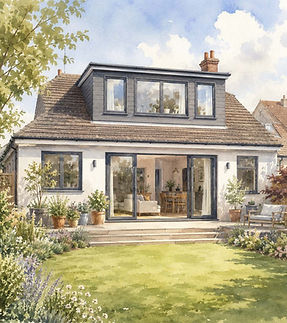
A dormer is one of the most common ways to improve the usability of a bungalow loft.
Dormers can create additional headroom and more practical wall space for furniture, bathrooms and storage. They may also make it easier to position the staircase properly.
A single rear dormer may be enough for a straightforward layout. Larger bungalows may suit multiple dormers or carefully designed front and rear alterations, depending on the planning position and the appearance of the property.
The size, number and external finish of the dormers will affect the cost.
Hip-to-Gable Bungalow Loft Conversions
Some bungalows have hipped roofs, with slopes falling away on several sides.
A hip-to-gable conversion extends one of the sloping sections upwards to create a vertical gable wall. This can significantly improve the usable floor area and make a more practical internal layout possible.
The alteration is often combined with dormers or rooflights.
A hip-to-gable bungalow conversion usually costs more than a simple rooflight scheme because the external roof shape and supporting structure need to be altered more substantially.
Roof-Lift Bungalow Loft Conversions
Where the existing roof is too low, a roof lift may be considered.
A roof lift involves raising or rebuilding part of the roof to create sufficient headroom for a proper additional floor.
This can unlock the potential of a bungalow that would otherwise be difficult to convert. However, it is a more substantial building project and will usually involve greater structural work, scaffolding, roofing and external alteration.
A roof-lift scheme is likely to require a higher budget than a straightforward dormer conversion. The planning position should also be reviewed carefully before detailed design work begins.
The Main Factors Affecting the Cost
Size of the Roof
A larger bungalow often has the potential to create more rooms, but it also requires more materials and labour.
The scale of the new floor affects the amount of structural steelwork, insulation, plasterboard, flooring, electrics, heating and decoration required.
Existing Roof Structure
The form and condition of the roof will influence the design.
Some bungalows have traditional timber roofs that may be relatively straightforward to adapt. Others have trussed rafters or more complex structures that require careful structural design and additional support.
The condition of the tiles, rafters, chimney stacks and supporting walls should also be reviewed.
Staircase Position
The staircase is central to the success of the layout.
It should arrive in a practical position without compromising the ground-floor rooms unnecessarily. A poorly positioned staircase can consume valuable space and make the new floor feel disconnected from the rest of the house.
The staircase arrangement should be considered at the beginning of the design process rather than left until the rooms have already been planned.
Structural Steelwork
New floor beams, joists, roof supports and padstones may be required.
The structural engineer will need to assess how the new loads can be carried safely through the existing bungalow. Additional strengthening may be required where the walls or foundations are unsuitable for the proposed design.
Dormers, Rooflights and Windows
Standard rooflights are generally more economical than large dormers or bespoke glazing.
However, carefully positioned windows can make a major difference to the quality of the finished rooms.
The final cost will depend on the number of windows, their size, the type of glazing and whether the design includes dormers, gable windows, Juliet balconies or feature glazing.
Bathrooms and Plumbing
Many bungalow conversions include at least one new bathroom or en-suite.
The cost will depend on the drainage route, the distance from the existing services, the quality of the sanitaryware, the amount of tiling and whether the hot-water system needs to be upgraded.
Creating two or more bathrooms can increase the plumbing and drainage costs noticeably.
Heating, Electrics and Insulation
The new floor will need appropriate insulation, ventilation, lighting, sockets and heating.
The existing boiler and electrical system should be reviewed to establish whether they can accommodate the additional rooms.
Internal Specification
The final budget will also depend on the standard of finish.
Flooring, fitted wardrobes, bespoke storage, bathroom fittings, joinery, lighting and decoration can all affect the overall cost.
Built-in storage can be particularly useful in a bungalow loft conversion because the lower parts of the roof slopes may otherwise be difficult to use efficiently.


Planning Permission
Some bungalow loft conversions may be possible under permitted development rights, provided the proposal complies with the relevant limitations and conditions.
However, the planning position should never be assumed.
The external appearance can change considerably where the proposal includes large dormers, roof alterations, raised ridges or extensive changes to the front of the property.
The position may also be different for listed buildings, homes in conservation areas and properties where permitted development rights have been removed or restricted.
Where permitted development rights are being relied upon, it is normally sensible to obtain a Lawful Development Certificate before starting work.
Building Regulations
A bungalow loft conversion will require Building Regulations approval.
The technical design will need to address:
-
structural stability;
-
the new floor construction;
-
roof structure;
-
insulation;
-
ventilation;
-
staircase design and headroom;
-
fire safety;
-
smoke alarms;
-
electrical work;
-
drainage; and
-
bathroom ventilation where applicable.
The fire-safety strategy may differ from the approach used for a loft conversion above a two-storey house, but it still needs to be considered carefully as part of the technical design.
A proper Building Regulations package and structural engineer's calculations should be prepared before construction begins.
Professional Fees and Additional Costs
The builder's quotation is only one part of the overall budget.
Homeowners should also allow for:
-
measured survey and design drawings;
-
planning advice;
-
a planning application or Lawful Development Certificate where required;
-
Building Regulations drawings;
-
structural engineer's calculations;
-
Building Control or Registered Approver fees;
-
scaffolding;
-
waste removal;
-
drainage alterations;
-
bathroom fittings;
-
flooring;
-
decoration; and
-
a sensible contingency allowance.
VAT should be checked carefully when quotations are compared.
Allow for a Contingency
A contingency allowance of approximately 10% to 15% is sensible for most bungalow loft conversions.
Once work begins, the contractor may uncover issues that were not fully visible during the initial survey.
The existing roof may need repairs. The supporting walls may require additional strengthening. Drainage routes may need to be altered. The boiler or electrical system may need upgrading.
A realistic contingency helps ensure that these matters can be addressed properly without placing unnecessary pressure on the project budget.
Compare Builder Quotations Properly
Do not compare quotations purely by looking at the final figure.
Ask each contractor for a written breakdown confirming what is included and excluded.
Check whether the quotation covers:
-
scaffolding;
-
structural steelwork;
-
roofing;
-
dormers or roof alterations;
-
windows and rooflights;
-
insulation;
-
staircase installation;
-
fire-safety measures;
-
electrics;
-
heating;
-
plumbing;
-
bathroom installation;
-
plastering;
-
joinery;
-
decoration;
-
waste removal; and
-
VAT.
A detailed comparison helps you understand the true cost of the project and reduces the likelihood of unexpected extras later.
Is a Bungalow Loft Conversion Worth the Cost?
For the right property, a bungalow loft conversion can be an excellent investment.
The roof may provide an opportunity to create a substantial additional floor while preserving the garden and avoiding the disruption of moving home.
The most successful projects begin with a realistic assessment of the existing roof space.
Before committing to the work, establish the likely planning position, the available headroom, the staircase arrangement and the approximate budget. A carefully designed conversion should feel like a natural extension of the bungalow rather than an awkward collection of rooms fitted into the roof.