
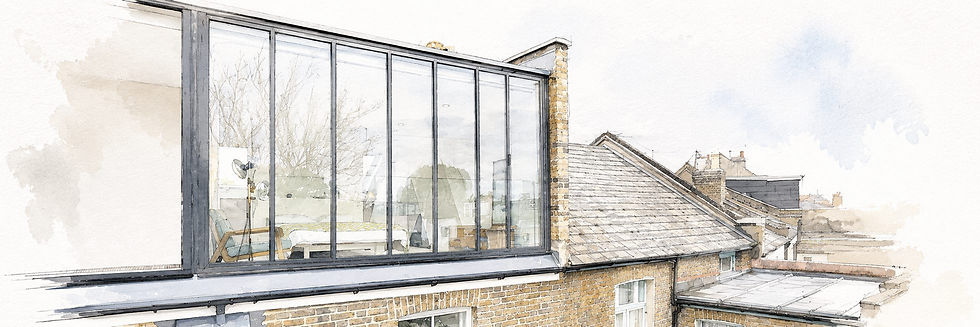
Loft Conversion Project Already Underway?
Find Practical Support When Your Loft-Conversion Project Has Already Started
A loft conversion does not always progress exactly as planned.
You may have started the work with a contractor and then discovered that additional drawings, structural calculations or approvals are needed.
You may be dealing with an unexpected issue after parts of the roof have been opened up.
Alternatively, the project may have slowed down because the design, technical requirements or responsibilities between the different professionals were not defined clearly enough at the outset.
The most important thing is not to ignore the issue or allow work to continue without understanding the implications.
A practical review can help identify what needs to be resolved and which professional support may be relevant.
Start by Understanding the Current Position
Every project is different.
Some loft conversions need a relatively straightforward piece of additional information. Others require a broader review of the design, structure, approvals and work already completed.
Before appointing anyone, it is helpful to establish:
-
what work has already been completed;
-
whether planning permission or permitted development was considered;
-
whether a Lawful Development Certificate was obtained;
-
whether Building Regulations approval has been arranged;
-
whether technical drawings are available;
-
whether structural calculations have been prepared;
-
whether building-control inspections have taken place;
-
whether party wall matters were considered;
-
what the contractor is asking for;
-
whether any work has been paused;
-
whether any issues have been raised by building control or neighbours.
Gathering the available information makes it easier to understand the next step.
Missing Building Regulations Drawings
Some homeowners begin work with planning drawings or a contractor’s outline proposal, then discover that more detailed technical information is needed.
Planning drawings and Building Regulations drawings serve different purposes.
Planning drawings explain the design, scale and appearance of the proposed loft conversion.
Building Regulations drawings provide more detailed technical information relating to matters such as:
-
the structural floor;
-
roof alterations;
-
beams and supports;
-
insulation;
-
ventilation;
-
staircases;
-
fire safety;
-
glazing;
-
drainage;
-
construction details.
Where technical drawings are missing or incomplete, it may be necessary to prepare or update them before the work progresses further.
Structural Questions During Construction
Opening up an existing roof can sometimes reveal conditions that were not obvious beforehand.
The contractor may discover unexpected timbers, chimney arrangements, supporting walls or structural limitations.
In other cases, the project may have started without a completed structural design.
A structural engineer may need to review:
-
new floor joists;
-
beam sizes and positions;
-
trimmed openings for the staircase;
-
dormer construction;
-
roof alterations;
-
hip-to-gable structures;
-
mansard structures;
-
chimney-breast changes;
-
supporting walls;
-
connections;
-
load paths;
-
work already completed.
Where the structural arrangement is uncertain, it is sensible to pause the relevant work until the position has been reviewed properly.
Building Control Has Not Yet Been Appointed
Most loft conversions require Building Regulations approval.
Where work has already started without an appropriate building-control route in place, it is important to address the position promptly.
Depending on the circumstances, you may need advice on:
-
the work already completed;
-
the drawings and calculations available;
-
which elements remain visible for inspection;
-
whether any parts of the work need to be opened up;
-
the appropriate route for the project;
-
the inspections still required;
-
the information needed before completion can be considered.
The correct next step will depend on the stage reached and the nature of the work.
It is better to seek advice early than allow further construction to conceal important elements.
Building-Control Queries or Inspection Issues
Even where building control has been arranged properly, questions can arise during construction.
An inspector or Registered Building Control Approver may ask for clarification, additional drawings or revised structural information.
This does not necessarily mean that the project has failed.
It may simply mean that a particular detail needs to be confirmed before the work can continue.
Common issues may relate to:
-
structural beams;
-
floor construction;
-
fire-safety arrangements;
-
insulation;
-
ventilation;
-
staircase head height;
-
drainage;
-
glazing;
-
concealed work;
-
changes made on site;
-
differences between the drawings and the actual construction.
Responding clearly and promptly can help the project move forward.
Changes Made During the Build
Homeowners sometimes decide to change the layout after construction has started.
The contractor may also suggest an alternative approach once parts of the existing roof have been opened up.
Some changes are sensible. Others can affect the planning position, structural design, Building Regulations drawings or contractor’s price.
Before agreeing to a variation, ask:
-
why the change is needed;
-
whether the design drawings need to be updated;
-
whether structural calculations need to be revised;
-
whether the planning position is affected;
-
whether building control should review the change;
-
what the additional cost will be;
-
whether the programme will be affected;
-
whether the change should be recorded in writing.
A small decision on site can sometimes have wider implications.
Party Wall Matters Identified Late
Loft conversions in terraced and semi-detached homes often involve work affecting a shared wall.
For example, structural beams may need to be inserted into or supported by a party wall.
Where party wall matters were not considered before work began, it is sensible to seek advice promptly.
The appropriate next step will depend on:
-
the work proposed;
-
whether relevant work has already started;
-
whether notices were served;
-
whether the neighbouring owner has raised concerns;
-
whether access is needed;
-
whether damage is alleged;
-
whether surveyors need to be appointed.
Party wall matters should be approached calmly and professionally.


Contractor Quotations and Unexpected Extras
Unexpected costs are one of the most common concerns during a building project.
Some variations may be reasonable, particularly where hidden conditions only become apparent after opening up the roof.
However, additional costs should still be explained clearly.
Ask the contractor to confirm:
-
what additional work is proposed;
-
why it is needed;
-
whether it was excluded from the original quotation;
-
the additional cost;
-
the effect on the programme;
-
whether drawings or calculations need to be updated;
-
whether building control should be informed;
-
whether the variation can be agreed in writing before work proceeds.
Clear records can help reduce misunderstandings later.
Poor Workmanship or Unfinished Work
Some homeowners seek support because they are concerned about the standard of work or because the original contractor has left the project incomplete.
The next step will depend on the nature of the problem.
It may be helpful to gather:
-
the original quotation;
-
any written contract;
-
drawings;
-
structural calculations;
-
building-control correspondence;
-
photographs;
-
invoices;
-
payment records;
-
emails and messages;
-
a list of outstanding items;
-
details of any alleged defects.
A clear record can help an appropriate professional understand the current position and advise on the practical next steps.
Keep Communication Clear
When a project becomes difficult, it is easy for communication to become fragmented.
Try to keep decisions, variations and requests for additional information in writing.
A simple project record can include:
-
the issue raised;
-
who raised it;
-
photographs;
-
the proposed solution;
-
any drawing or calculation required;
-
the agreed cost;
-
the effect on the programme;
-
the date the issue was resolved.
This can help everyone understand what has been agreed and reduce the risk of further confusion.
Do Not Allow Problems to Build Up
Many loft-conversion issues can be resolved more easily when they are identified early.
Continuing with uncertain structural work, covering over details before inspection or allowing variations to accumulate without written agreement can make the position more difficult.
Where necessary, pause the relevant part of the work and obtain suitable advice.
The aim is to understand the issue, identify the correct professional support and help the project move forward on a clearer basis.
Tell Us About Your Loft Conversion
Has your loft-conversion project already started?
Tell us a little about the property, the work completed so far and the issue you are trying to resolve.
You can also let us know whether you need help with drawings, structural calculations, building control, party wall matters, contractors or another aspect of the project.
Where appropriate, APN can introduce you to suitable professionals who may be able to assist.